At Ark, there are 4 different teams involved in printing a customer's order to their exact specifications. The entire print process takes anywhere from 3-14 business days depending on the complexity of the order. Within that timeline, the risk of getting details about specifications can get lost in communication - especially if that data is spread across various applications. How might we provide a single source of truth? How do we help the various teams collaborate better? I led the design to introduce a new ERP aimed at improving team collaboration and provide a single source of truth for any data related to a particular order quickly.

THE PROBLEM
All of the orders that come through any of Ark’s four subsidiaries go to our production warehouse where they are sorted, processed, produced and then sent out for delivery with the appropriate branding. Ark’s commitment as an agency is recognizing that the work we do impacts the organizations we serve. To be able to stick to that commitment, we recognized the need to streamline the internal processes so the team could be more effective.
There are a couple of ERPs and print shop management systems on the market, however, they weren't customizable enough to fit our needs. They either had a lot of features we didn't need or not enough features to tackle the issues we faced. Individual teams within the company had found various tools online that seemed to work for them however, finding data specific to a particular order was spread across various applications and there was no tool that fit the needs of everyone in the organization.
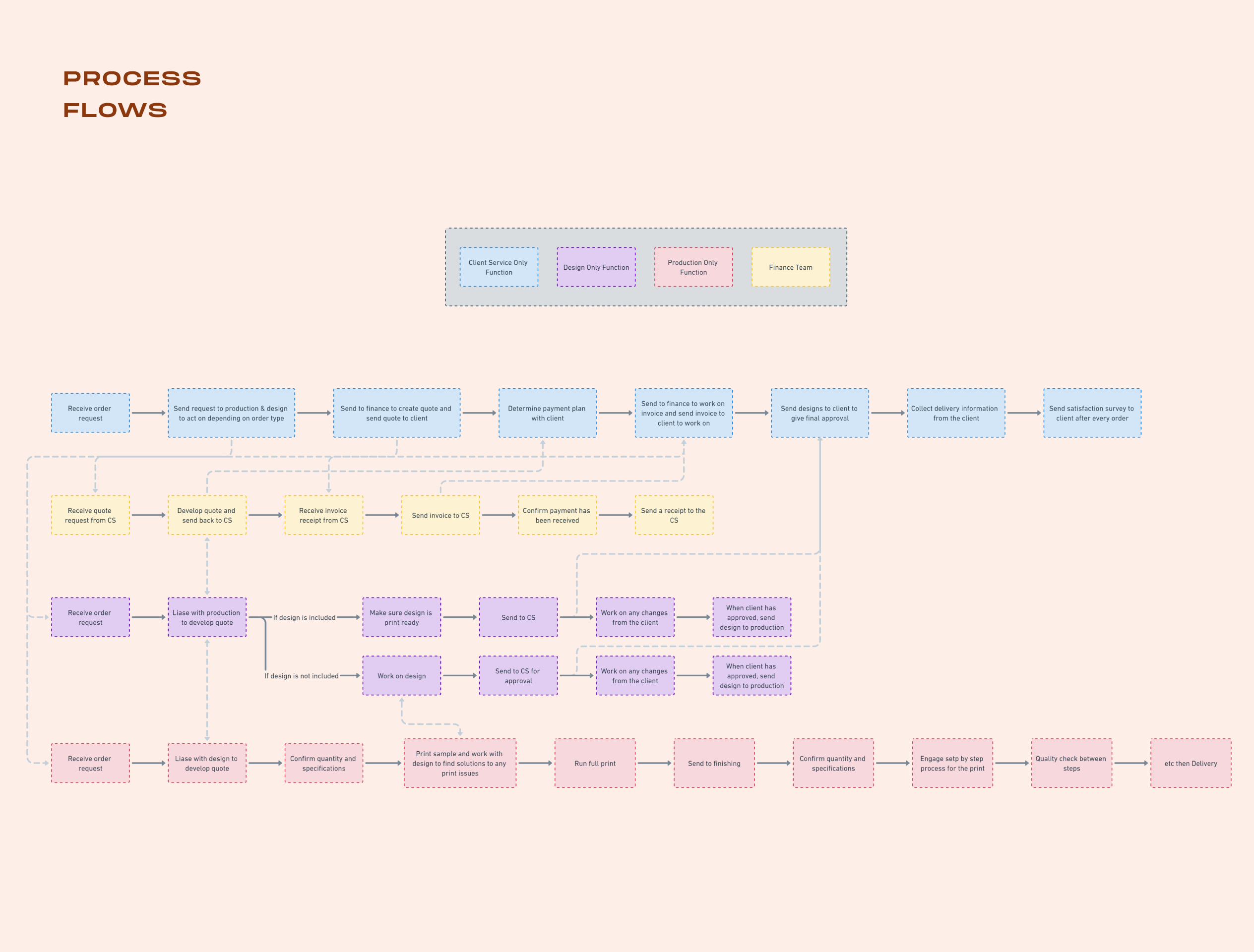
Building a solution that works for each team meant involving relevant stakeholders in the design process. By conducting interviews, focus groups and contextual inquiries with those stakeholders, the key challenges and gaps within the process flow became clear.
Every team depends on input from another team to produce relevant output, however, individual teams had used different products to help enhance their workflow because it fit right into their existing workflow. It was important for me to compare the various tools that were already in use and understand the various points, teams are able to intersect to fulfill a customer’s order.
The challenge of building a solution that could be used by everyone within the company is that everyone has a problem that needs solving. I needed to prioritize the problems that needed solving and decide on the modules we needed in the first version of the ERP.
Once that was completed, I set out to create an information architecture to understand how the information can be organized and presented within the ERP. I also conducted tree tests with participants to provide valuable insights into possible navigation problems that might affect the user experience of the ERP.

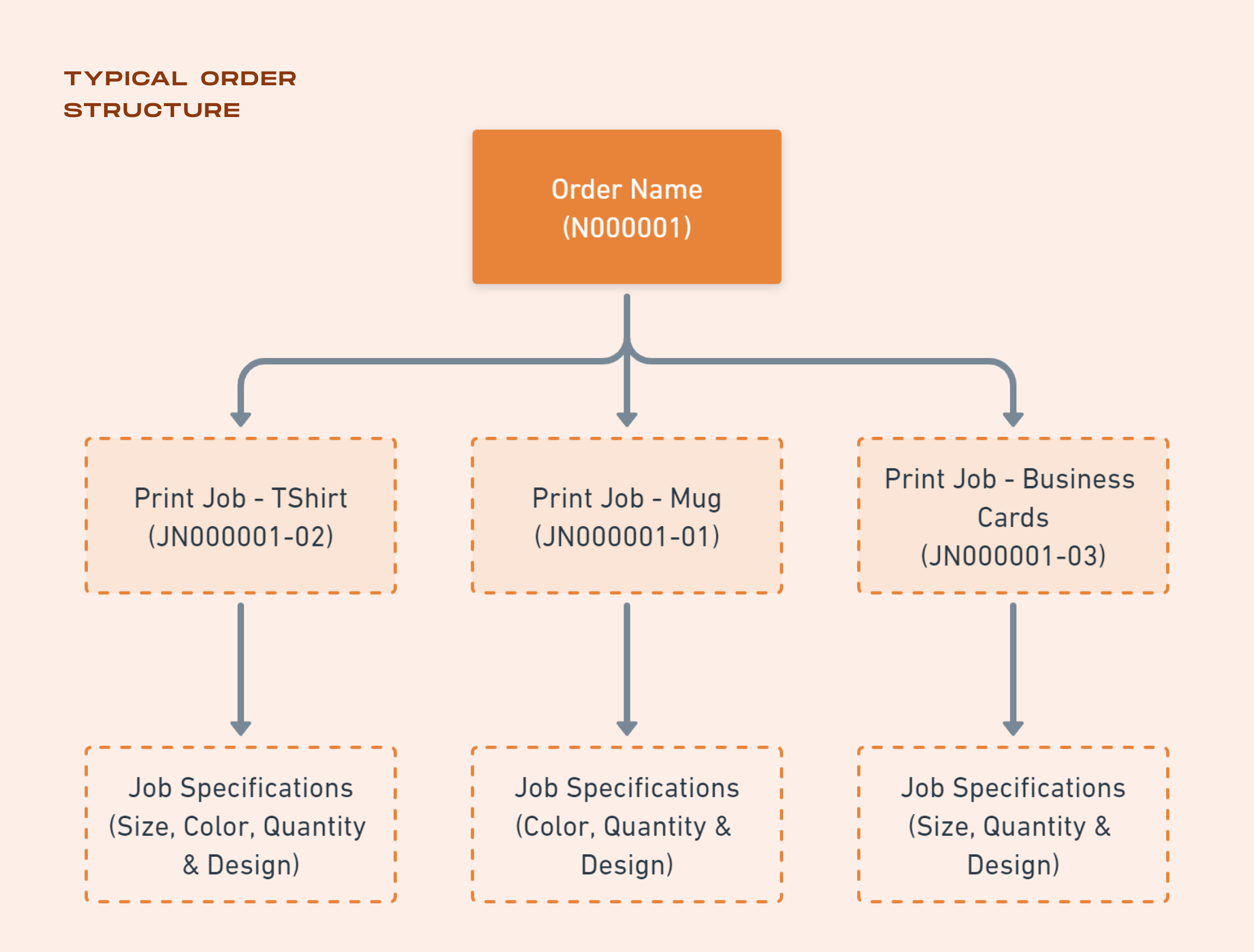
Every process that needs to be done/managed revolves around the orders that customers make. Those orders typically come unstructured via E-Mails or WhatsApp. It was important for us to be able to structure that data and present it in a readable manner.
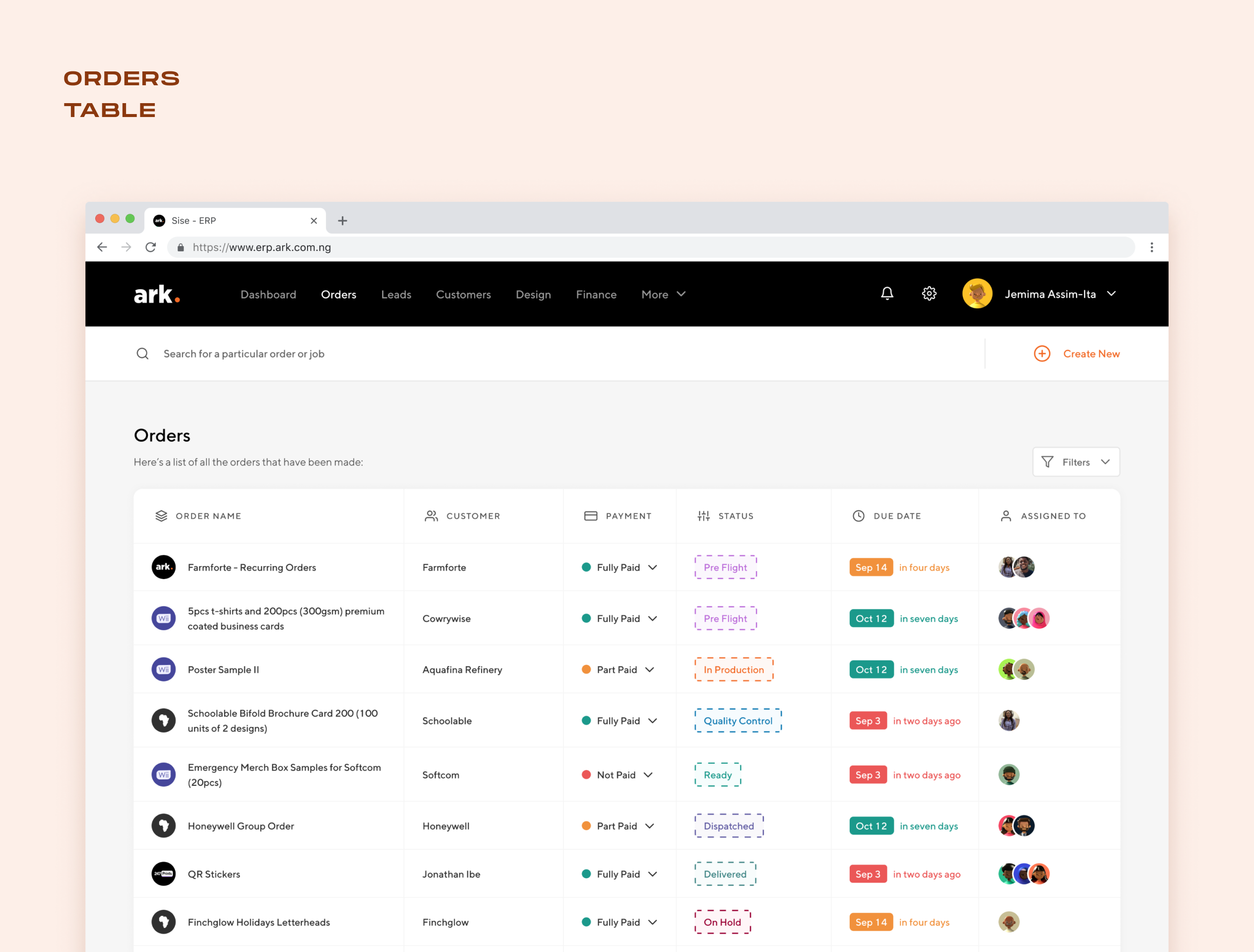
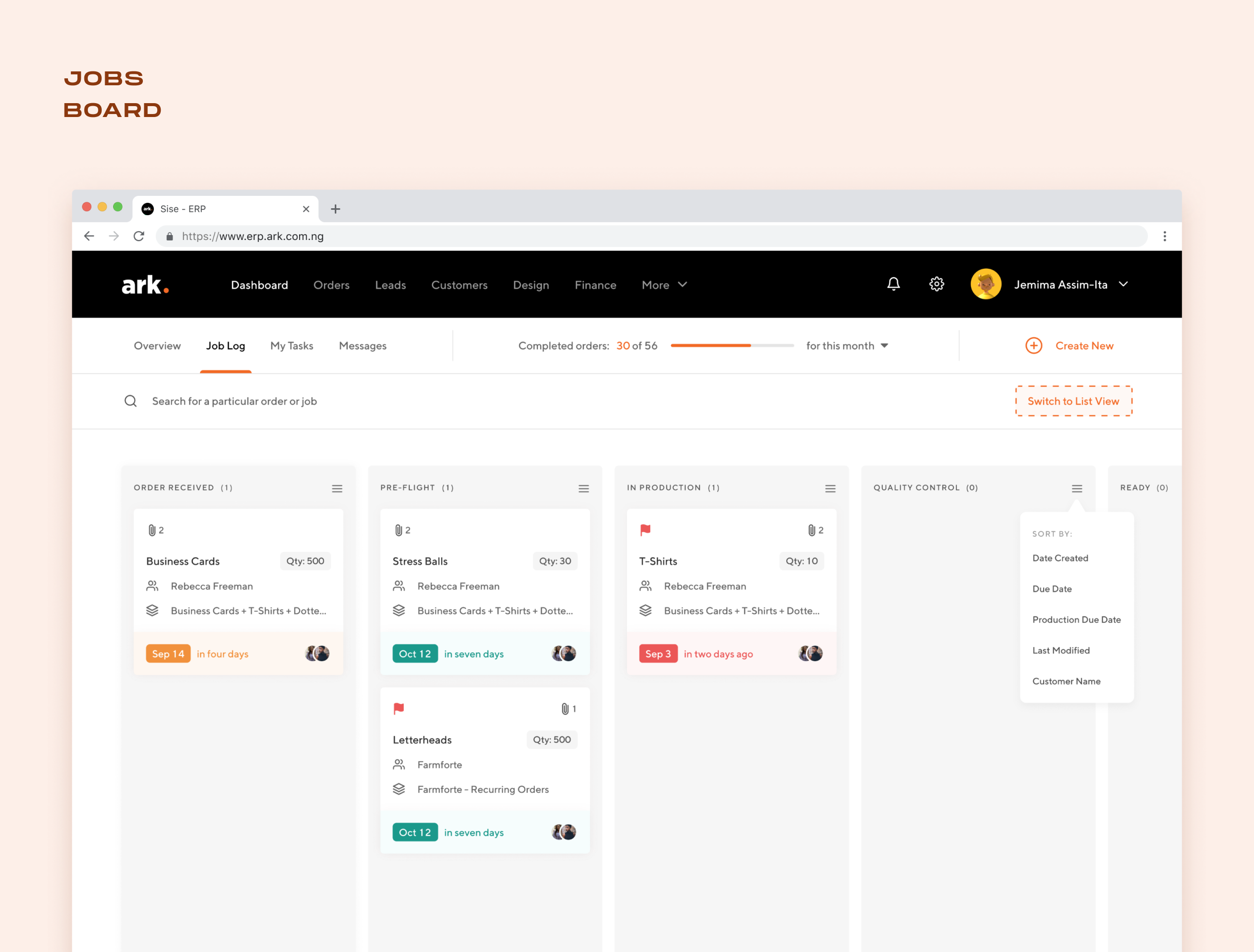
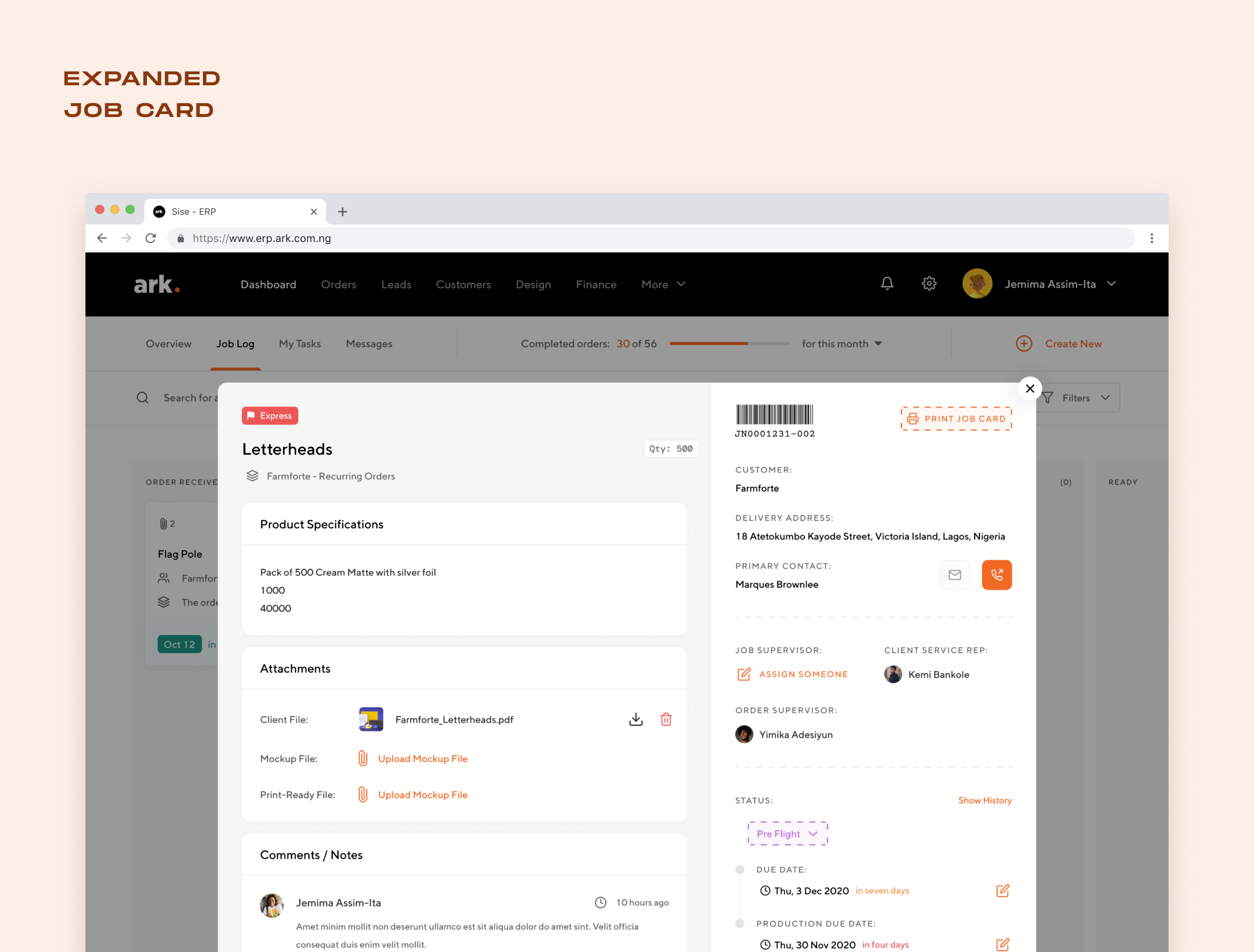
During the contextual inquiries, I had noticed that people hardly use their phones or laptops in the middle of production. This would prove to be a problem down the line because one of the reasons for building the ERP was to have a single source of truth for any information about a customer’s order and help reduce any errors that might happen during production.
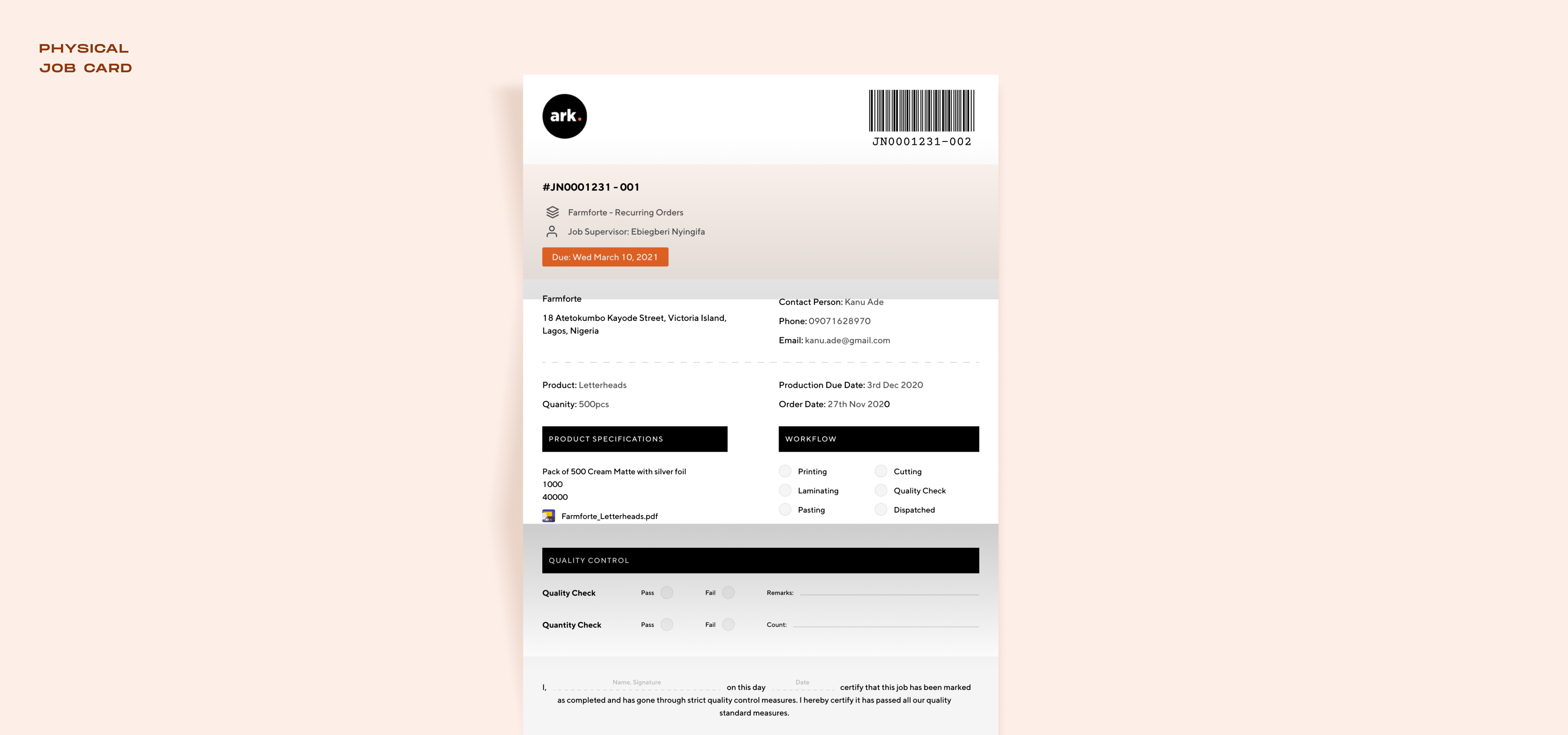
Instead of forcing a culture change, I designed the ERP to fit into the existing culture to reduce the learning curve. Working closely with the CEO, we decided to make job cards printable. That way people could always have the information about that order. It wasn’t just enough to make those job cards printable, we had to make it useful beyond presenting information and so we included a physical quality control checklist.
This way cards are passed across from relevant team members that are physically available and we’re sure that the quality standard is always being met. We also included barcodes to help our dispatch riders update the status of every order once its been delivered without spending time looking for the corresponding order on the ERP.
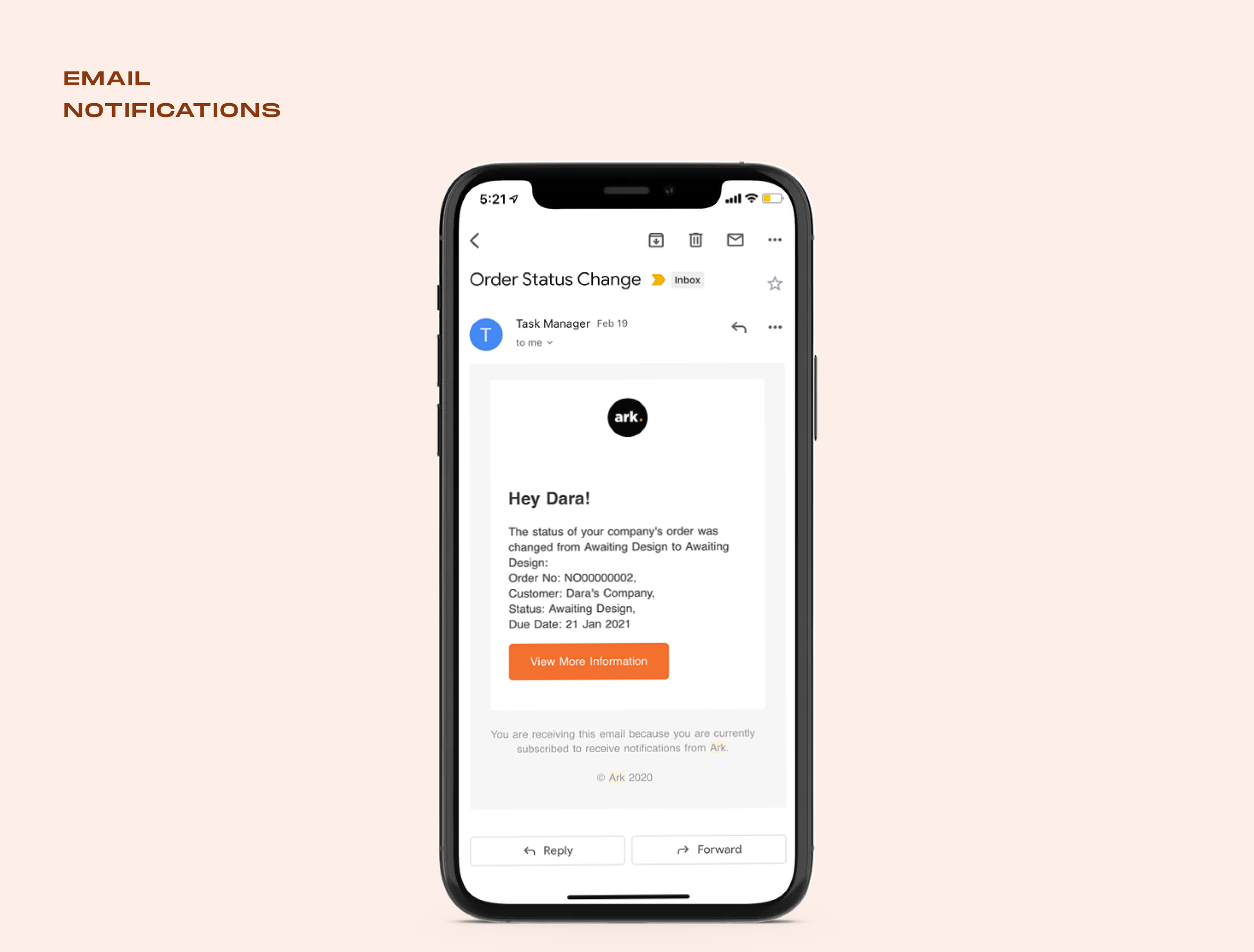
A big part of order management is keeping customers informed of any changes to their order and letting them know when to expect it or if their order would be delayed.
We decided to send SMS and Email Notifications to customers so they are kept informed of any changes made to an order. This way, anytime an employee changes the status of an order from one stage to an order, the customer gets both email and SMS notifications about that change immediately.
This help them to be informed and also provides us with a level of accountability.

THE PRODUCT
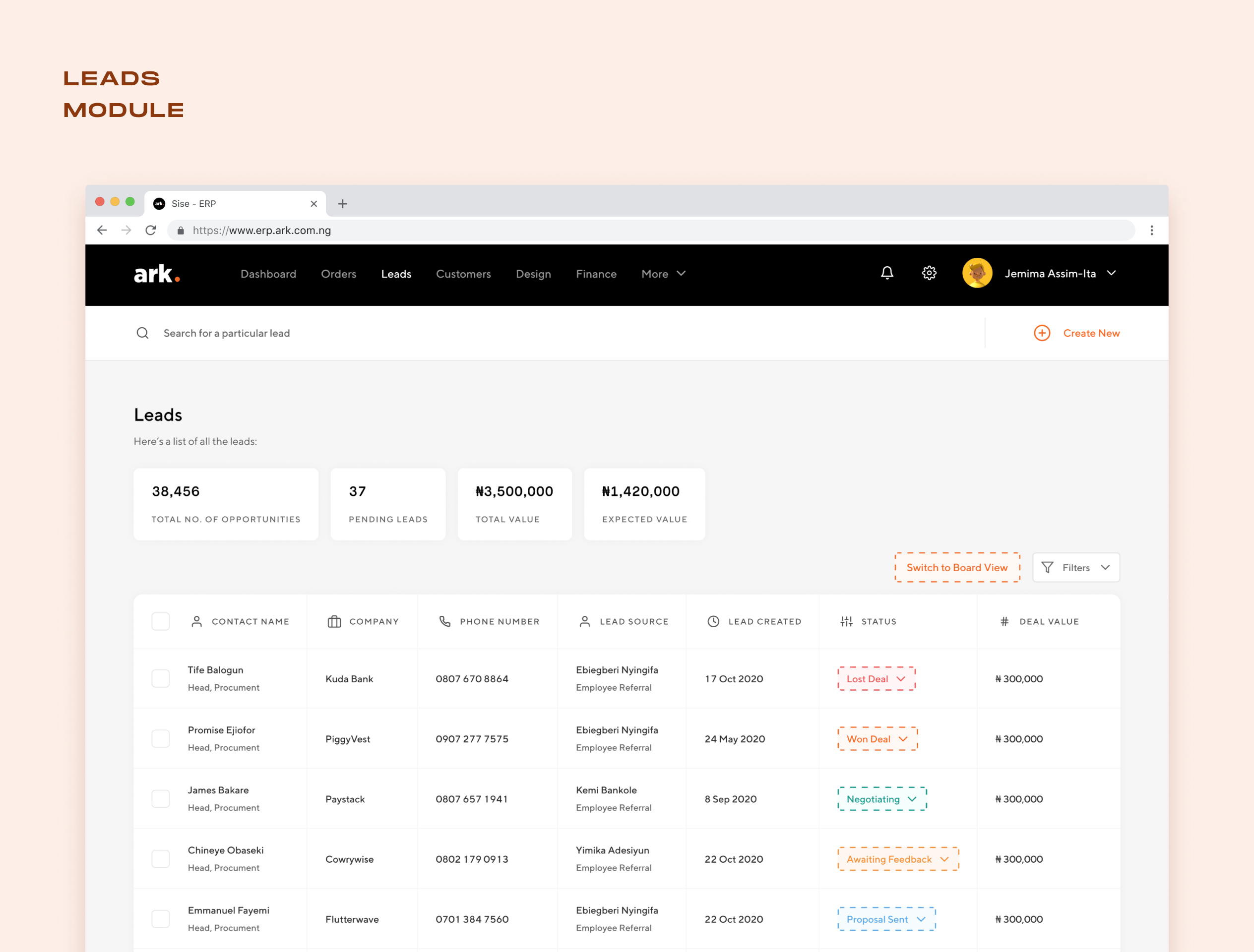
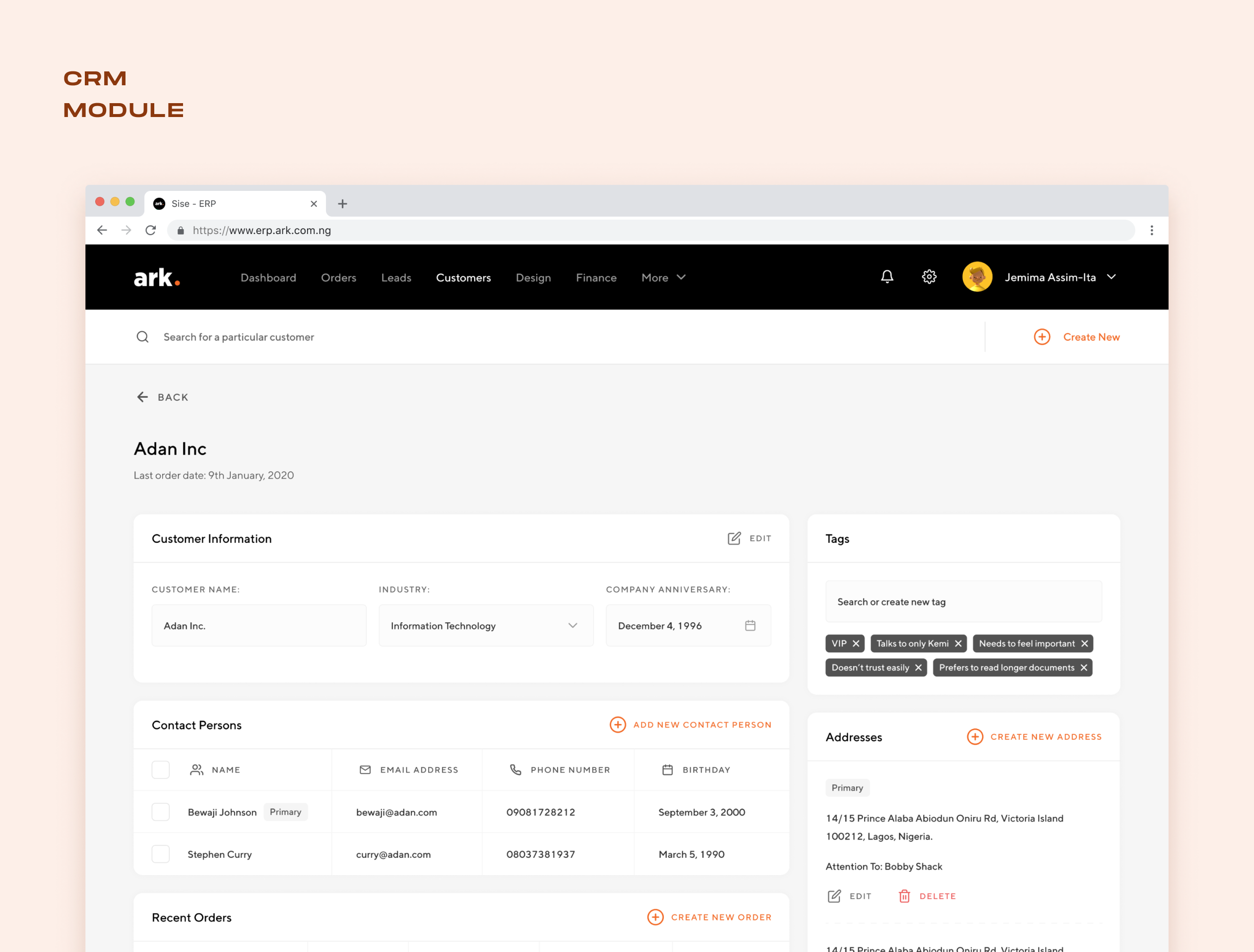
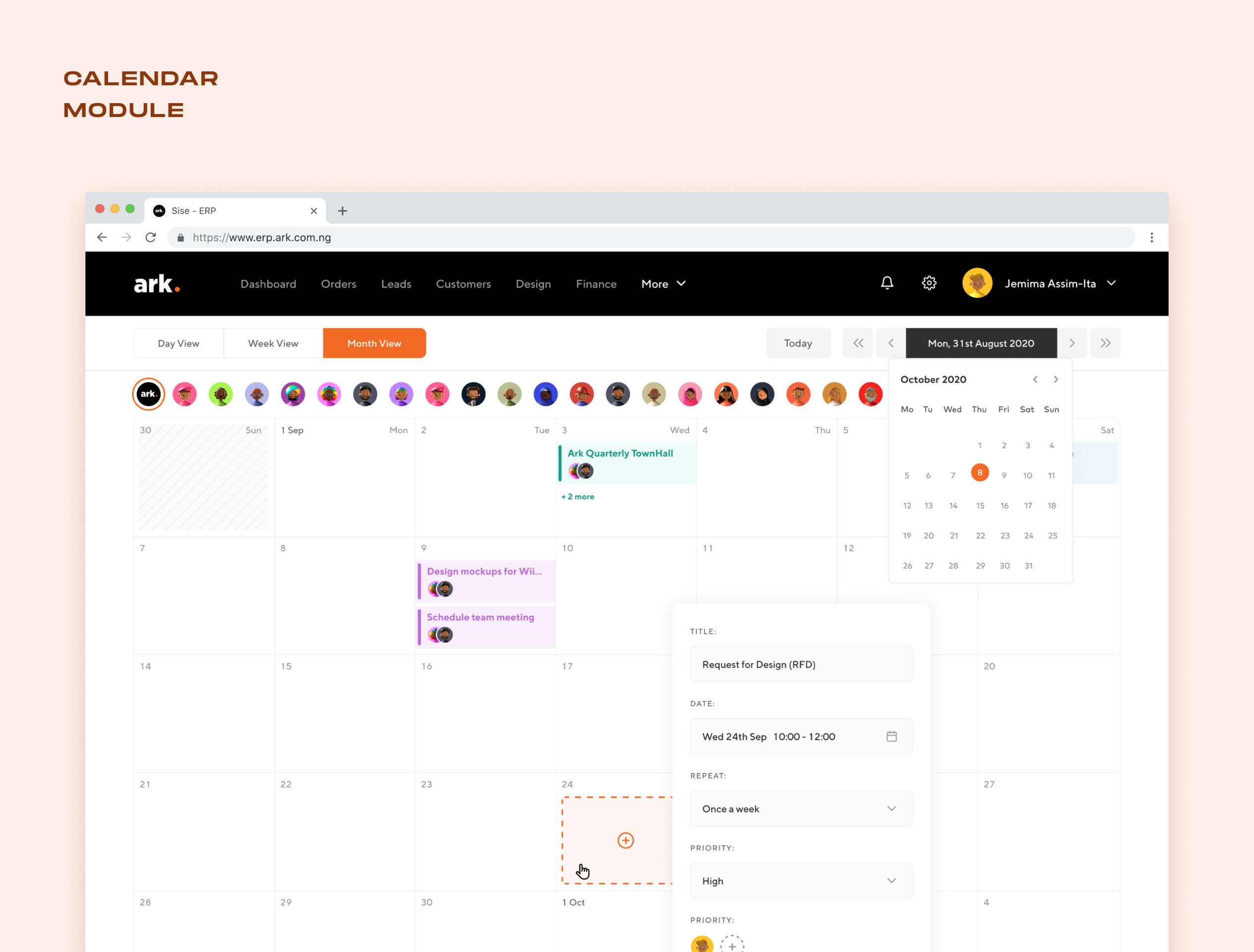
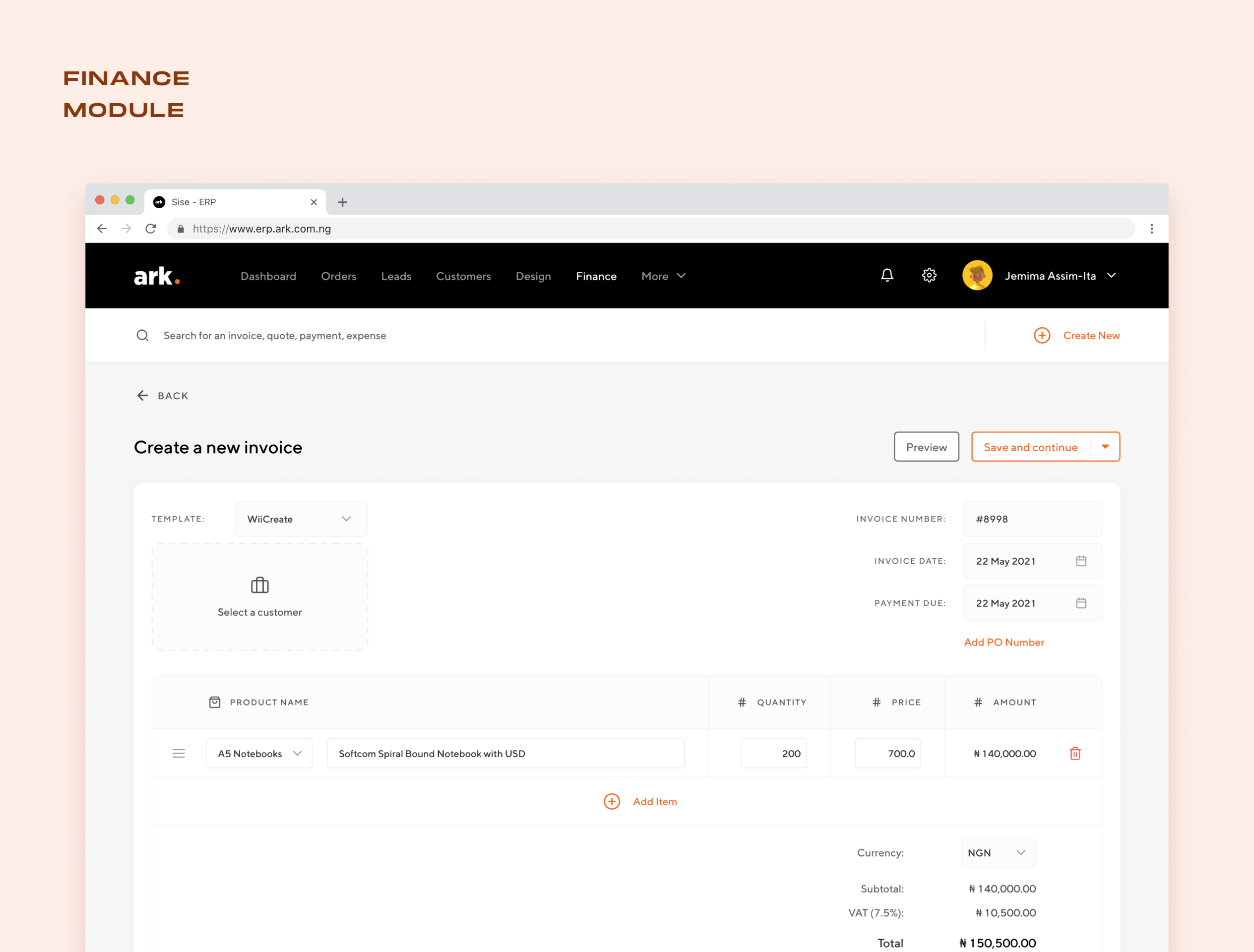
Apart from the order management module, we built in other modules including a Leads & CRM Module, Products & Inventory Module, Calendar Module, Messaging Module and a Finance Module to help unify the other key processes that revolve around the company.


OUTCOMES & LEARNINGS
It’s been over 6 months since we started using the ERP across Ark and production rates have increased by over 25% and 80% of orders got delivered at least one day before the due date.
We built up trust and excitement from our customers because they felt more involved in the process and some even requested for an online client portal so they could see everything in real-time and also place orders directly from the portal.
We’ve seen the success the ERP could have on just our business. Now we’re working on commercializing and scaling this product to work across other sectors and make it less expensive and readily available for other SMEs.